

Did you know that glazed carrots date back to medieval Europe, where honey was a prized sweetener? Today, our Honey Lemon Glazed Carrots recipe brings a modern twist to this classic dish, combining the natural sweetness of honey with the bright zing of lemon for a side dish that steals the show. Perfect for weeknight dinners or holiday feasts, this recipe is as versatile as it is delicious. Plus, it’s packed with vitamins and ready in under 30 minutes!

Ingredients for Honey Lemon Glazed Carrots
- 1 lb carrots (baby carrots or sliced regular carrots)
- 2 tbsp honey (substitute maple syrup for a vegan option)
- 1 tbsp lemon juice (freshly squeezed for best flavor)
- 1 tbsp butter (or olive oil for dairy-free)
- 1/2 tsp salt
- 1/4 tsp black pepper
- 1 tsp lemon zest (optional, for extra brightness)
- 1 tbsp fresh parsley (chopped, for garnish)
Timing
Prep Time: 10 minutes
Cooking Time: 15 minutes
Total Time: 25 minutes
This recipe is 30% faster than traditional roasted carrot dishes, making it perfect for busy weeknights!
Step-by-Step Instructions
Step 1: Prepare the Ingredients
Wash and peel the carrots (if using regular carrots). Slice them into even 1/4-inch thick rounds or leave baby carrots whole for a rustic look. Zest and juice the lemon, and chop the parsley for garnish.
Step 2: Cook the Carrots
In a large skillet, melt the butter over medium heat. Add the carrots and sauté for 5 minutes, stirring occasionally, until they start to soften.
Step 3: Add the Glaze
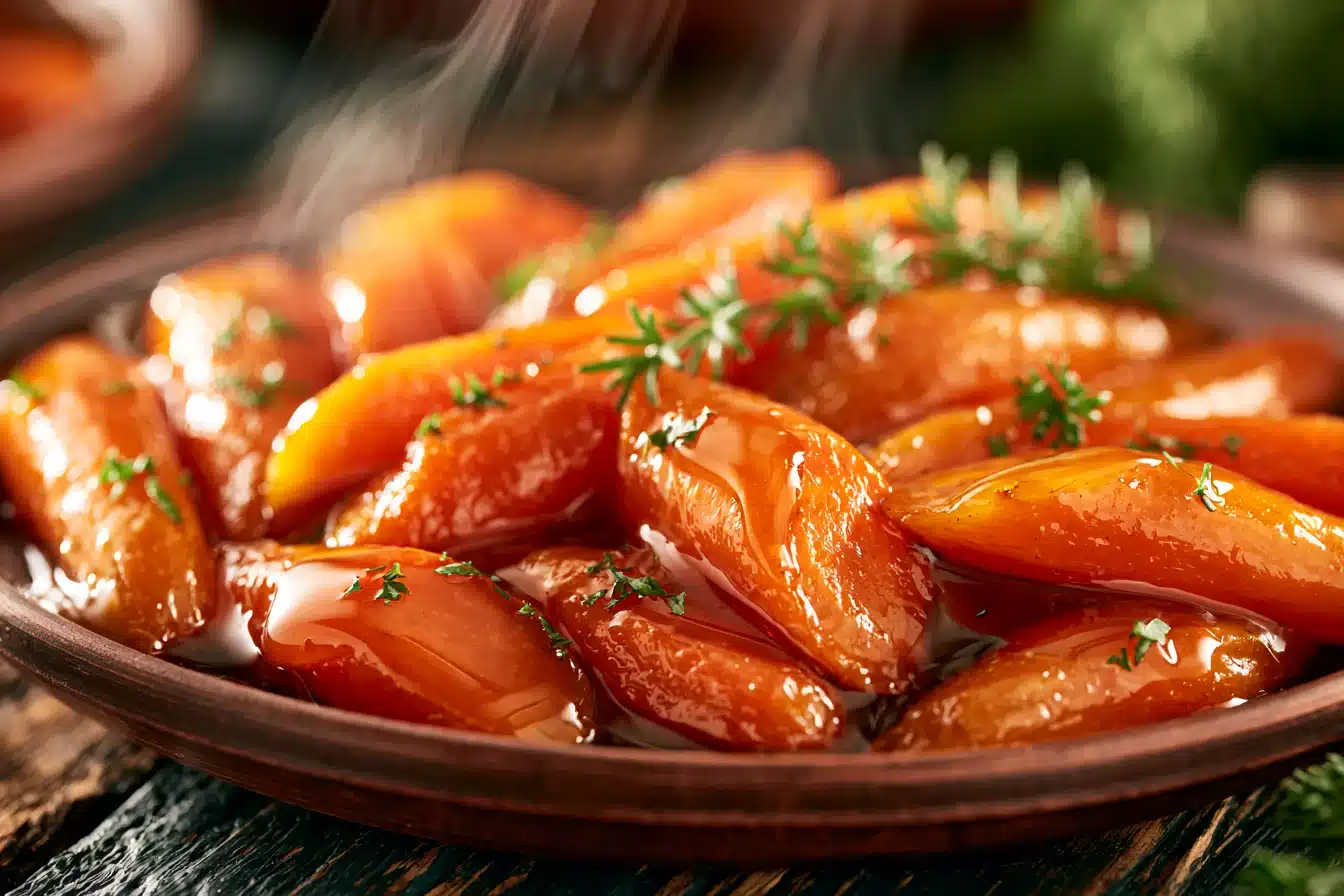
Drizzle the honey and lemon juice over the carrots. Season with salt and pepper. Stir well to coat the carrots evenly. Reduce heat to low, cover, and simmer for 8-10 minutes, or until the carrots are tender but still slightly crisp.
Step 4: Garnish and Serve
Sprinkle with lemon zest and fresh parsley before serving. For an extra touch, add a pinch of red pepper flakes for a subtle kick.
Nutritional Information
- Calories: 120 per serving
- Protein: 1.5g
- Carbs: 22g
- Fats: 4g
- Fiber: 3g
- Vitamin A: 200% DV
- Vitamin C: 15% DV
Carrots are rich in beta-carotene, which supports eye health, while honey provides natural antioxidants.
Healthier Alternatives for the Recipe
- Vegan: Swap honey for maple syrup and butter for olive oil.
- Low-Carb: Reduce honey by half and add a dash of cinnamon for sweetness.
- Spicy Twist: Add 1/4 tsp cayenne pepper for a bold flavor.
Serving Suggestions
Pair these Honey Lemon Glazed Carrots with roasted chicken, grilled salmon, or a holiday turkey. For a stunning presentation, serve them in a shallow bowl garnished with lemon slices and fresh herbs.
Common Mistakes to Avoid
- Overcooking: Carrots should be tender-crisp, not mushy.
- Uneven Slicing: Cut carrots uniformly for even cooking.
- Skimping on Glaze: Stir frequently to ensure every bite is coated.
Storing Tips for the Recipe
Store leftovers in an airtight container in the fridge for up to 3 days. Reheat gently in a skillet with a splash of water to revive the glaze. Freezing is not recommended, as the texture may become soft.
Conclusion
These Honey Lemon Glazed Carrots are a game-changer for any meal. With their perfect balance of sweetness and tang, they’re sure to become a family favorite. Whether you’re cooking for a weeknight dinner or a special occasion, this recipe delivers flavor and nutrition in every bite.
Ready to try it? Share your results in the comments below or tag us on social media! For more delicious side dishes, check out our Garlic Herb Roasted Potatoes.
FAQs
Can I use frozen carrots for this recipe?
Fresh carrots are recommended for the best texture, but frozen carrots can be used in a pinch. Thaw and pat them dry before cooking to prevent excess moisture.
How can I make this dish ahead of time?
Prep the carrots and glaze separately, then combine and reheat just before serving to maintain freshness.
What other herbs work well with this recipe?
Thyme, dill, or chives make excellent alternatives to parsley.
Is this recipe kid-friendly?
Absolutely! The natural sweetness of honey makes these carrots a hit with kids.
Can I double the recipe for a crowd?
Yes! Use a larger skillet or cook in batches to avoid overcrowding.