

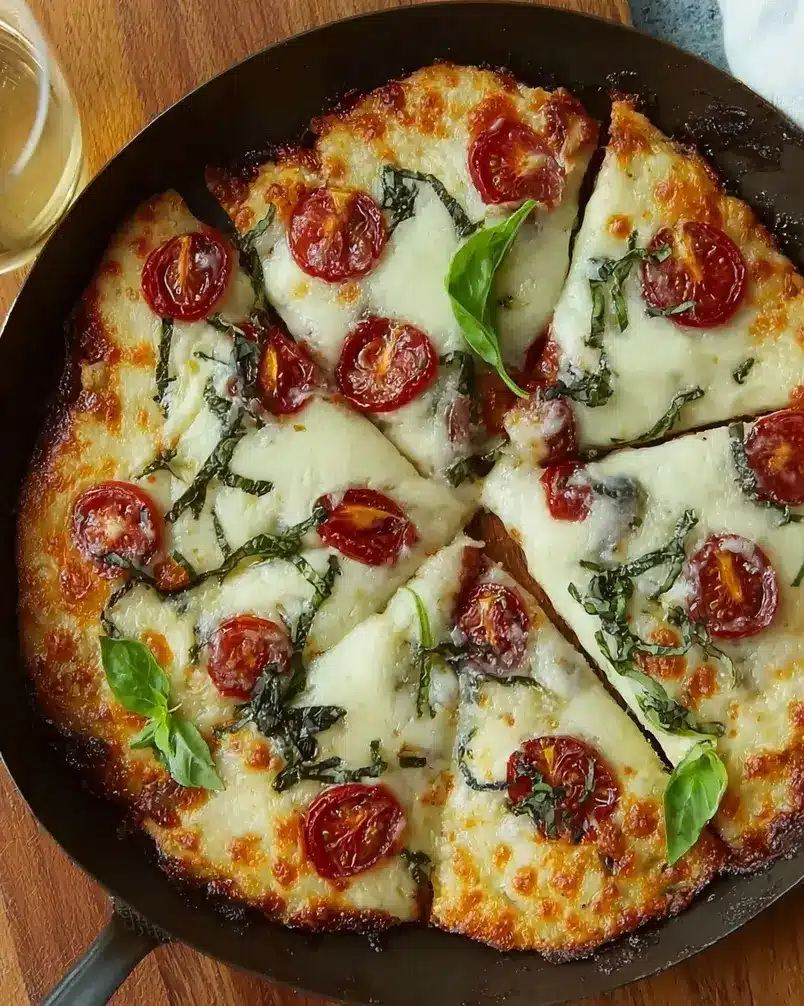
Did you know that the average American consumes 46 slices of pizza per year, yet many struggle to achieve that perfect, craveable crust at home? What if I told you that a golden, crispy, and ridiculously cheesy masterpiece is not only achievable but can be made right in your own skillet with our unbelievable cheesy-crust skillet pizza? Forget messy pans and uneven cooking; this recipe is designed for maximum flavor, minimal fuss, and a countertop transformation that will redefine your pizza nights forever. Get ready to unlock the secrets to a perfect cheesy-crust skillet pizza that’s even better than your favorite pizzeria’s.

Gather Your Cheesy Arsenal: Ingredients for Your Skillet Pizza
Let’s get down to business! This isn’t just about throwing ingredients together; it’s about creating a symphony of flavors and textures. We’re focusing on quality and simplicity to make your cheesy-crust skillet pizza shine.
* For the Dough:
1 ½ cups warm water (105-115°F / 40-46°C) – This is crucial for activating the yeast! Too hot, and you’ll kill it; too cold, and it won’t wake up.*
* 1 teaspoon active dry yeast
1 teaspoon granulated sugar – Yeast food, plain and simple.*
3 ¾ cups all-purpose flour, plus more for dusting – The foundation of our delightful crust.*
2 teaspoons salt – For flavor and dough structure.*
2 tablespoons olive oil, plus more for greasing – Adds richness and helps achieve that perfect golden hue.*
* For the “Cheesy Crust” Magic:
½ cup shredded mozzarella cheese – The melty, gooey heart of our cheesy edge.*
¼ cup grated Parmesan cheese – Adds a sharp, nutty dimension that complements the mozzarella beautifully.*
* Optional: Pinch of garlic powder or Italian seasoning mixed with the cheese blend for an extra flavor punch.
* For the Toppings (Your Culinary Canvas!):
½ cup pizza sauce – A good quality sauce makes a world of difference.*
1 ½ cups shredded mozzarella cheese – Generosity is key for that classic pizza pull!*
* Your favorite toppings! Think pepperoni, mushrooms, bell peppers, onions, olives, cooked Italian sausage, fresh basil… the possibilities are endless.
Substitution Savvy:
* Dough: If you’re short on time, a store-bought pizza dough can be a lifesaver! Just let it come to room temperature before pressing it into the skillet. For a gluten-free option, look for a reliable gluten-free pizza dough mix or recipe.
* Cheeses: Feel free to experiment with other melty cheeses like Monterey Jack, Gruyere, or a sharp cheddar for a unique twist on your cheesy crust.
* Olive Oil: Avocado oil or a neutral vegetable oil can be used if olive oil isn’t your preference.
The Clock is Ticking: Timing Your Cheesy Masterpiece
This cheesy-crust skillet pizza is designed for weeknight success!
* Prep Time: Approximately 20 minutes (plus dough rising time, if making from scratch).
* Cook Time: 15-20 minutes.
* Total Time: Around 1 hour (including dough rise).
That’s about 30% less active time than many traditional homemade pizzas, giving you more time to enjoy the anticipation (and the eating!).
From Dough to Delicious: Step-by-Step Skillet Pizza Perfection
Follow these steps to craft your ultimate cheesy-crust skillet pizza:
Step 1: Wake Up the Yeast and Mix the Dough
In a large bowl or the bowl of your stand mixer, combine the warm water, yeast, and sugar. Let it sit for about 5-10 minutes until it gets foamy – this confirms your yeast is alive and kicking! Now, add the flour, salt, and 2 tablespoons of olive oil. If using a stand mixer, mix with the dough hook on low speed until a shaggy dough forms, then increase speed to medium and knead for 5-7 minutes until the dough is smooth and elastic. If mixing by hand, stir until combined, then turn out onto a lightly floured surface and knead for 8-10 minutes until smooth. Pro Tip: A well-kneaded dough is the secret to a chewy, resilient crust. It should spring back when gently poked.
Step 2: Let the Dough Rise and Conquer
Lightly grease a clean bowl with olive oil. Place the dough in the bowl, turning to coat all sides. Cover the bowl with plastic wrap or a damp kitchen towel and let it rise in a warm place for about 1 hour, or until doubled in size. While your dough is rising, take this time to prep your toppings and preheat your oven to 450°F (230°C). You’ll also want to get your skillet ready.
Step 3: Skillet Prep – The Foundation of Flavor
Choose a 10-12 inch oven-safe skillet (cast iron is ideal for even heat distribution!). Add about 1-2 tablespoons of olive oil to the skillet and heat it over medium-high heat on the stovetop for 2-3 minutes. This hot oil will create the signature crispy, golden crust when the dough hits it. Be cautious, the oil will be hot!
Step 4: Dough Meets Skillet – The Crispy Beginning
Once the dough has risen, gently punch it down. Carefully place the dough into the hot, oiled skillet. Using your hands (they’ll be slightly oiled from the dough), gently press and stretch the dough to cover the bottom of the skillet. It doesn’t need to go up the sides yet. Let the dough cook on the stovetop over medium heat for about 2-3 minutes, just until it starts to lightly brown on the bottom. This initial stovetop cook is key for that perfect crispy base.
Step 5: The Cheesy Crust Creation
Now for the magical part! Sprinkle the mozzarella and Parmesan cheese mixture (and any optional seasonings) evenly around the outer edge of the dough in the skillet. Press the cheesy mixture down slightly so it adheres to the dough and the skillet. This is what will form your incredible cheesy-crust skillet pizza edge! Don’t be shy with the cheese here – it’s the star of the crust show!
Step 6: Topping Time – Your Pizza Dream Awaits
Spread your pizza sauce evenly over the dough, leaving the cheesy edge free. Then, sprinkle the remaining 1 ½ cups of mozzarella cheese over the sauce. Finally, arrange your favorite toppings as desired. Consider balance: don’t overload the pizza, or it might become soggy.
Step 7: Oven-Baked Perfection
Carefully transfer the skillet to your preheated oven. Bake for 15-20 minutes, or until the crust is golden brown and the cheese is bubbly and slightly browned. Keep an eye on it – ovens can vary!
Step 8: Rest and Revel
Once golden and bubbly, carefully remove the skillet from the oven. Let the cheesy-crust skillet pizza rest in the skillet for 5-10 minutes before attempting to slide it out. This allows the cheese to set slightly, making it easier to slice and serve. The aroma at this stage is simply divine!
Nutritional Insights for Your Cheesy Delight
While pizza is often seen as an indulgence, understanding its nutritional profile helps us make informed choices. A typical slice of our cheesy-crust skillet pizza (excluding specific toppings) can be estimated as:
* Calories: ~350-450 kcal
* Protein: ~15-20g
* Carbohydrates: ~40-50g
* Fat: ~15-25g
* Fiber: ~2-3g
Data can vary significantly based on flour type, cheese quantity, and chosen toppings. For example, adding vegetables can increase fiber and micronutrients, while pepperoni will increase fat and sodium.
Healthier Twists on Your Cheesy-Crust Skillet Pizza
Who says you can’t have your pizza and eat it “healthier” too? Here are some fantastic ways to lighten up your cheesy-crust skillet pizza without sacrificing flavor:
* Whole Wheat Wonder: Swap half of the all-purpose flour for whole wheat flour in the dough for added fiber and a nuttier flavor.
* Veggie-Loaded: Pile on the vegetables! Spinach, mushrooms, bell peppers, onions, zucchini, and cherry tomatoes add nutrients, fiber, and volume. Pre-sautéing watery veggies like mushrooms can prevent sogginess.
* Leaner Proteins: Opt for grilled chicken breast, turkey pepperoni, or plant-based crumbles instead of traditional fatty meats.
* Lighter Cheese: Use part-skim mozzarella and a sprinkle of a sharp, flavorful cheese like Parmesan or Pecorino Romano to get more flavor bang for less cheese.
* Sauce Smarts: Look for lower-sodium, no-sugar-added pizza sauces, or even make your own with crushed tomatoes, garlic, and herbs.
* Cauliflower Crust Alternative: For a truly lower-carb and gluten-free option, explore cauliflower crust recipes specifically designed for skillet cooking. You can adapt the cheesy edge concept to that as well!
Serving Suggestions: Beyond the Slice
Your cheesy-crust skillet pizza is a star on its own, but here are some ideas to elevate your pizza night:
* The Classic Combo: Serve with a fresh, crisp garden salad tossed with a light vinaigrette. The coolness and crunch of the salad perfectly balance the warm, cheesy pizza.
* Soup’s On: A hearty tomato basil soup or a creamy vegetable soup makes for a comforting pairing, especially during cooler months.
* Garnish Galore: A final flourish of fresh basil leaves, a drizzle of balsamic glaze, or a sprinkle of red pepper flakes can add visual appeal and an extra layer of flavor.
* Dipping Delights: Offer a small bowl of marinara sauce for dipping those irresistible cheesy crust edges. Ranch or garlic aioli are also popular choices!
* Personal Pan Portions: Once cooked, you can easily cut wedges from the skillet, making it perfect for individual servings or a family-style spread.
Common Pitfalls to Sidestep for Skillet Pizza Success
Avoid these common mistakes to ensure your cheesy-crust skillet pizza is a triumph every time:
Failing to Preheat the Skillet: A cold skillet means a soggy, undercooked crust. Always heat your skillet with oil before* adding the dough.
* Over-Proofing or Under-Proofing Dough: Both can lead to a dense, unappealing crust. Watch for that doubled-in-size cue!
* Overloading Toppings: Too many toppings, especially watery ones, can make your pizza fall apart or become soggy.
* Not Letting it Rest: Patience is a virtue! Letting the pizza rest in the skillet for a few minutes after baking makes it much easier to remove and slice cleanly.
* Using a Non-Oven-Safe Skillet: Make sure your skillet can handle the heat of the oven. Cast iron is ideal, but many stainless steel skillets are also oven-safe. Always check!
Storing Your Cheesy-Crust Skillet Pizza Treasures
Got leftovers? Lucky you! Here’s how to keep your delicious cheesy-crust skillet pizza tasting great:
* Cool Completely: Allow any leftover pizza to cool to room temperature before storing. This prevents condensation from making the crust soggy.
* Airtight is Right: Store slices in an airtight container or wrap them tightly in plastic wrap and then foil. This helps maintain moisture and prevent freezer burn if you’re freezing.
* Refrigeration: Leftovers will keep in the refrigerator for 2-3 days.
* Freezing: For longer storage, wrap individual slices tightly and freeze for up to 1-2 months.
* Reheating: The best way to reheat is in a preheated oven or toaster oven at around 350°F (175°C) until warmed through and the crust is re-crisped. You can also achieve decent results in a skillet over medium-low heat or even in an air fryer. Microwaving tends to result in a softer crust.
Your Cheesy Skillet Pizza Journey Begins Now!
There you have it – the breakdown for creating an extraordinary cheesy-crust skillet pizza right in your own kitchen. It’s a recipe that proves gourmet-style pizza with that incredible cheesy edge is accessible, achievable, and incredibly rewarding. From the crispy, golden crust kissed by hot oil to the bubbling layers of cheese and your favorite toppings, this pizza is destined to become a family favorite.
Ready to conquer your cravings? Give this cheesy-crust skillet pizza a try this week! We’d love to hear about your topping creations and any personal twists you add. Feel free to leave a comment below with your experience, or share your masterpiece on social media and tag us! For more delicious recipes and cooking tips, explore our other posts on [Link to another pizza recipe on your blog] or [Link to a post on dough making tips].
Frequently Asked Questions About Cheesy-Crust Skillet Pizza
Q1: Can I make this pizza dough ahead of time?
A1: Absolutely! You can prepare the dough up to 2-3 days in advance and let it ferment slowly in the refrigerator. Just bring it to room temperature for about 30-60 minutes before shaping and cooking. Cold fermentation can even enhance the flavor!
Q2: What’s the best way to get the pizza out of the skillet without it falling apart?
A2: The resting period after baking is crucial. Once rested, you can carefully slide a spatula around the edge of the pizza to loosen it, then gently tilt the skillet to slide the pizza onto a cutting board. Alternatively, you can carefully lift it with two spatulas or by gently pulling at the crust edge, depending on how firm the base is.
Q3: Can I use a regular round cake pan or a pizza pan instead of a skillet?
A3: While a skillet is ideal for achieving the signature crispy crust due to its direct stovetop heating and oven-safe nature, you can adapt this. You’d preheat a pizza stone or baking steel in the oven and then carefully transfer the assembled pizza from a parchment-lined baking sheet onto the hot stone. However, you’ll miss out on the direct stovetop crisping and the distinct cheesy crust formation directly against the hot skillet.
Q4: My cheesy crust isn’t browning. What should I do?
A4: Ensure your oven temperature is accurate. If the cheese is melting but not browning, you can try placing the pizza under the broiler for the last minute or two of baking, watching it very carefully to prevent burning. Ensure you’re using a combination of cheeses that readily browns, like Parmesan.
Q5: How can I make the dough gluten-free?
A5: For a gluten-free cheesy-crust skillet pizza, we recommend using a high-quality gluten-free all-purpose flour blend that includes xanthan gum. You may need to adjust the liquid slightly, as gluten-free flours absorb moisture differently. Follow the package directions for the best results, and be aware that gluten-free doughs can be stickier and less elastic.
Q6: Is it possible to make this vegan?
A6: Yes! You can adapt this recipe for a vegan cheesy-crust skillet pizza. Use a vegan pizza dough recipe or your favorite vegan dough. For the cheesy crust, use vegan mozzarella and a vegan Parmesan-style cheese alternative. Ensure your chosen sauce and any other toppings are also vegan. The baking time might vary slightly depending on the vegan cheese’s melting properties.